Focus on top performing stocks
Research · Momentum universe · Backtest
Most people who've spent time studying momentum trading have heard the same advice: focus on the strongest stocks.
Richard Dennis drilled it into the Turtles. William O'Neil built CANSLIM around it, picking the strongest earners in the strongest industries. Qullamaggie says it on almost every stream: he wants the stock leading the move, not the one following it.
It gets repeated so often it starts to feel like received wisdom. Take it on faith and move on.
But what does the data actually say?
Building the universe
We started wide. Every name in the database went into the pool, then we filtered down to real, tradable momentum names:
- Enough dollar volume to actually get in and out
- Enough daily movement (ADR) to give the strategy room to breathe
- A minimum price to screen out the junk
- Some minimum past return so weak names drop out early
Then we ranked each stock by return over four time frames: 1 month, 3 months, 6 months, and 1 year. Each stock got a rank from 1 (strongest) down to however many names we had that period.
Rank 1 is the stock that went up the most. The further down the list, the weaker the name.
The experiment
We ran the exact same breakout strategy on two different universes. Top 100 ranked stocks in one. Ranks 100 to 1000 in the other.
Same entry logic. Same exits. Same position sizing. The only difference was which stocks were eligible.
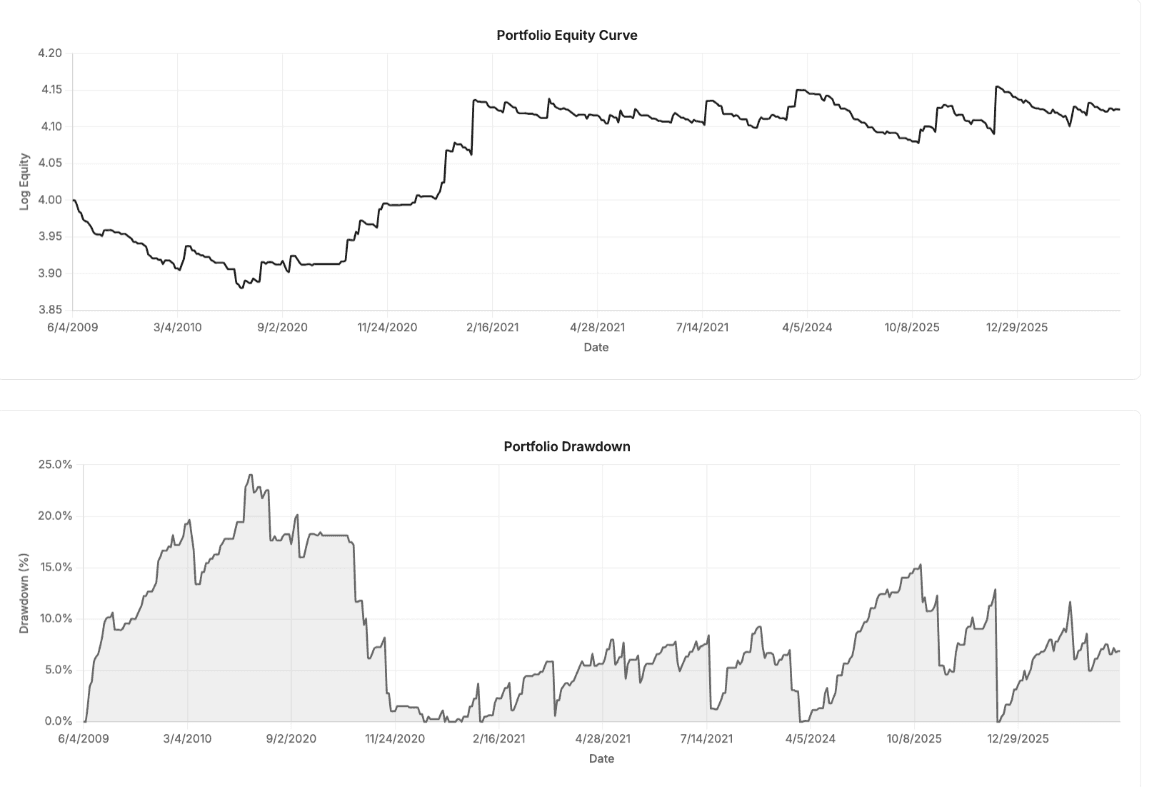
Ranks 100–1000
Equity curve:
Stats:
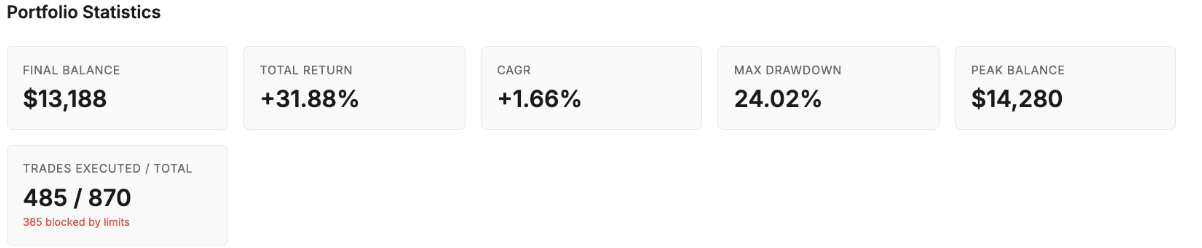
Not something we'd trade. Returns are weak, drawdowns are too deep, consistency isn't there. Whatever edge the strategy has on paper evaporates on middling names.
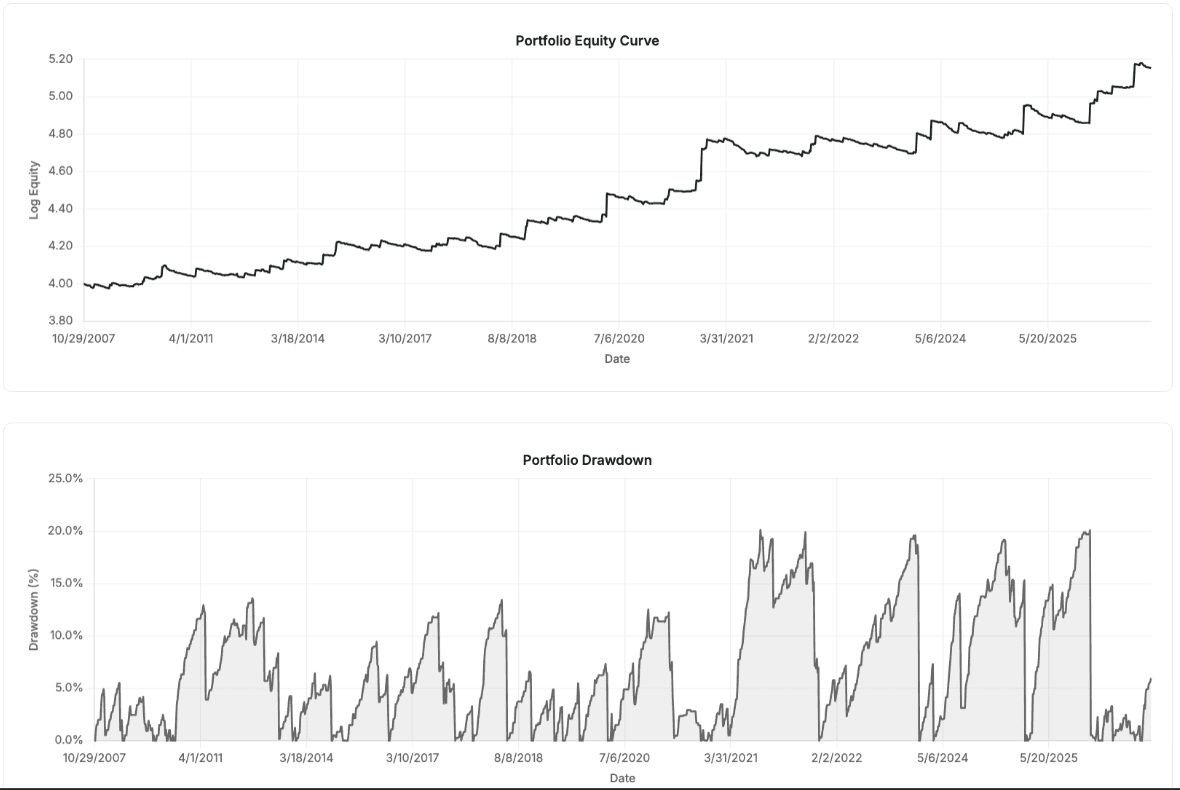
Top 100
Same strategy, different universe:
Stats:
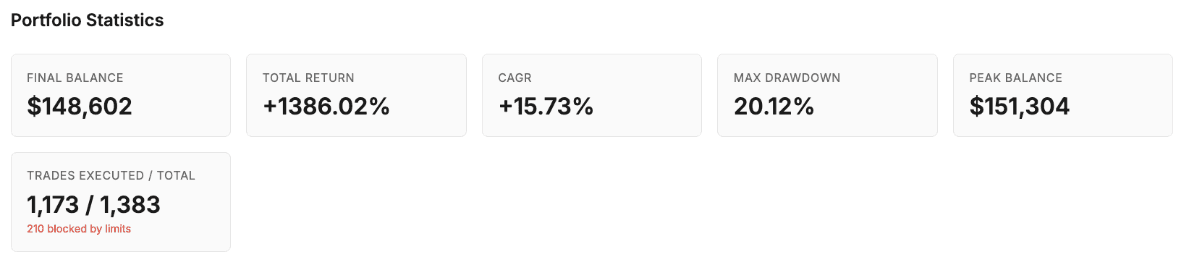
That's what rank buys you.
What this means
We went in expecting the top 100 to win. Not by that much.
Strong stocks have more people watching them. When a leading name breaks out, there's a crowd ready to push it further. On a rank-500 stock you get the move, but nobody follows. The stock stalls while everyone else is trading something better.
Top-ranked names are also there for a reason. An earnings beat. A product launch. Something real is behind the move. A random bounce doesn't have that, and the chart usually makes it obvious pretty fast.
Richard Dennis, O'Neil, Qullamaggie figured this out through years of trading real money. The backtest just puts a number on what they already knew.